BEYOND THE BEAUTIFUL GAME: DELIVERING A SAFE AND SECURE AJAX VS BAYERN MUNICH HISTORIC SHOWPIECE IN KENYA

Introduction: A historic occasion that demands exceptional preparation
The arrival of two European football giants, FC Bayern Munich and AFC Ajax Amsterdam, on Kenyan soil presents an extraordinary opportunity for the country's sporting industry. The fixture scheduled for 5 January 2027 will not simply be another international football match; it will mark the opening of the Raila Odinga International Stadium, a major sporting facility designed to position Kenya as a destination for international sporting events.
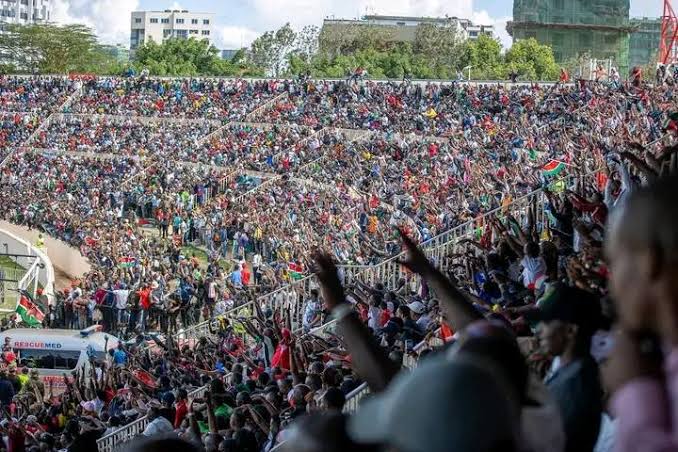
However, an event of this magnitude requires more than an impressive stadium, world-class football and enthusiastic supporters. It requires an integrated safety and security framework capable of managing a large crowd, international delegations, dignitaries, media representatives, commercial partners and members of the public.
The anticipated international attention, combined with the significance of inaugurating a new stadium, makes comprehensive security planning essential.
The responsibility of delivering a safe event rests with all stakeholders, including the Government of Kenya, the Local Organising Committee (LOC), stadium management, National Police Service, event organisers, emergency response agencies, stewards and private security providers.
In line with applicable CAF and FIFA safety and security standards, relevant Kenyan legislation and approved event procedures, the following operational considerations should guide preparations.
1. Development of an integrated event safety and security plan
The starting point should be a comprehensive Event Safety and Security Plan that provides a coordinated operational framework for the entire occasion.
Unlike an ordinary league fixture, the inauguration of a national stadium introduces additional operational requirements, including ceremonial activities, dignitary movements, international delegations, entertainment and potentially multiple spectator entry and exit phases.
The plan should address:
- Event-specific security risk assessment.
- Police and private security coordination.
- Steward deployment and supervision.
- Stadium access control and accreditation.
- VIP and VVIP protection arrangements.
- Team and match officials' security.
- Crowd management and spectator segregation.
- Traffic and transport management.
- Emergency response and evacuation.
- Fire safety and medical preparedness.
- Media and broadcasting security.
- Incident reporting and post-event evaluation.
The plan should be developed through consultation with all responsible agencies and subjected to multi-agency review and approval before implementation.
A clearly documented allocation of responsibilities is essential to ensure that every stakeholder understands their operational mandate.
2. Multi-agency security coordination and command structure
An event of this magnitude cannot be managed effectively by one security agency operating independently.
A unified multi-agency coordination structure should be established, bringing together all relevant government departments, security agencies and event stakeholders.
The National Police Service should coordinate public security operations in accordance with its mandate, working closely with the LOC, stadium management and other agencies.
The command structure should establish:
- Overall event security command.
- Police operational command.
- Stadium safety and security coordination.
- Stewarding command and supervision.
- Traffic management coordination.
- Emergency medical and fire response.
- Intelligence and threat assessment coordination.
- Incident escalation and reporting procedures.
Regular security coordination meetings should be held to monitor preparedness, address outstanding issues and confirm operational readiness.
3. Stadium safety inspection and operational readiness
A new stadium must undergo a comprehensive safety and security inspection before being opened to the public.
The fact that a facility is newly constructed does not automatically mean that every operational system is ready for a major international event.
A joint inspection should verify:
- Stadium structural integrity and spectator accommodation.
- Maximum safe holding capacity and approved event configuration.
- Entry and exit gates.
- Emergency evacuation routes.
- Stairways, gangways and vomitories.
- Perimeter barriers and fencing.
- CCTV surveillance and monitoring systems.
- Public address systems.
- Fire detection and firefighting equipment.
- Emergency lighting and backup power.
- Medical rooms and ambulance access.
- Venue Operations Centre functionality.
The maximum safe capacity must be formally established for the event configuration. The advertised seating capacity should not automatically be treated as the approved safe occupancy figure.
Particular attention should be given to gangways and stairways, which must remain clear throughout the event.
4. Crowd management and deployment of stewards
With a significant number of spectators expected, stewarding will be one of the most important elements of the event's safety operation.
Stewards are the first point of contact for spectators and play an important role in maintaining order, providing information, facilitating movement and identifying potential safety concerns.
The stewarding plan should provide for adequate personnel at:
- External stadium perimeter.
- Spectator entry gates.
- Ticket validation and screening points.
- Internal circulation areas.
- Spectator seating sections.
- VIP and VVIP areas.
- Hospitality facilities.
- Media areas.
- Restricted access zones.
- Emergency exits and evacuation routes.
All stewards must receive appropriate pre-event training and operational briefings.
Their training should cover crowd dynamics, communication, conflict de-escalation, customer care, emergency evacuation, first response and incident reporting.
Supervisors must continuously monitor crowd behaviour and identify emerging risks before they develop into major incidents.
5. Ticketing, accreditation and access control
A major international fixture requires a reliable ticketing and accreditation system.
The event organisers should ensure that tickets are genuine, properly validated and linked to designated stadium entry points.
The official event ticketing information indicates that spectators will have QR-based tickets, numbered seating arrangements and designated gates. These arrangements should be integrated into the physical access-control operation.
Talanta Sports City+1
Security personnel should ensure that:
- Every spectator possesses a valid ticket.
- Tickets are validated at designated turnstiles.
- Entry is restricted to authorised gates.
- Accreditation is checked for restricted areas.
- Unauthorised access is prevented.
- Counterfeit and duplicated tickets are identified.
- Queue management is maintained outside the stadium.
Special attention should be given to preventing ticket fraud, unauthorised entry and congestion around the turnstiles.
6. Search regime and prohibited items
A comprehensive spectator screening regime must be implemented at all designated entry points.
Security officers and stewards should be familiar with the approved prohibited-items list and the procedures for handling prohibited articles.
Screening arrangements should cover bags, personal belongings and other items that may pose a safety or security threat.
The prohibited-items policy should be communicated to spectators well before match day through official event communication channels.
The organisers should ensure sufficient screening lanes, trained personnel and clear signage to minimise unnecessary delays.
Screening must be conducted professionally, consistently and with respect for the dignity of spectators.
7. VIP, VVIP and dignitary protection
The inauguration of a national stadium is likely to attract senior government officials, invited dignitaries, international football representatives, club executives and other distinguished guests.
The event therefore requires a separate VIP and VVIP security coordination plan.
This should address:
- Designated arrival and departure arrangements.
- Secure access routes.
- Reserved parking and vehicle management.
- Accreditation and guest verification.
- Hospitality access control.
- Movement coordination.
- Liaison with the relevant protective security teams.
All arrangements should be coordinated with the appropriate government security agencies and should not interfere with normal spectator movement or emergency access.
8. Protection of teams, officials and international delegations
The security of FC Bayern Munich, AFC Ajax Amsterdam, match officials and other international representatives must be carefully coordinated.
Security arrangements should cover the visiting delegations' arrival, accommodation, training activities, transportation and departure.
Dedicated liaison personnel should coordinate with the respective club representatives.
The plan should also provide for controlled team movements within the stadium, including access to dressing rooms, warm-up areas and the field of play.
International visitors should receive appropriate security support while being allowed to undertake their official activities without unnecessary disruption.
9. Traffic management and external perimeter security
One of the major challenges associated with a high-profile event is managing the movement of thousands of spectators around the stadium.
The external security plan should be coordinated with traffic authorities, police, stadium management and relevant transport stakeholders.
Key considerations include:
- Traffic circulation and diversion arrangements.
- Designated pedestrian routes.
- Public transport drop-off and pick-up areas.
- Authorised parking facilities.
- Emergency vehicle access.
- Team and VIP vehicle movements.
- Management of commercial and informal activities around the venue.
- Prevention of congestion along access roads.
Clear communication should be provided to the public regarding access routes, parking arrangements and restrictions.
The external perimeter should be monitored to identify congestion, unauthorised activities and potential security concerns.
10. Venue Operations Centre and integrated communication
The Venue Operations Centre (VOC) should be activated as the central operational coordination and monitoring facility.
It should facilitate communication between the police command, stadium management, stewarding command, medical teams, fire services and other relevant agencies.
The VOC should have access to operational CCTV systems, reliable communication equipment, stadium information and emergency-response procedures.
Every significant incident should be communicated to the VOC through established reporting channels.
The importance of the VOC cannot be overstated. It enables decision-makers to obtain a common operational picture, coordinate responses and ensure that incidents are addressed promptly.
11. Emergency preparedness, evacuation and medical response
A comprehensive emergency response plan must be in place before spectators are admitted.
The plan should identify potential emergencies, responsible agencies, communication arrangements and the procedures for initiating emergency interventions.
The following scenarios should be addressed:
- Fire outbreaks.
- Medical emergencies.
- Crowd surges and overcrowding.
- Structural or infrastructure failures.
- Pitch invasions.
- Public disorder.
- Security threats.
- Severe weather.
- Power failures.
- Emergency evacuation.
Adequate ambulances, first-aid facilities, qualified medical personnel and designated referral hospitals should be available.
Firefighting equipment should be inspected, accessible and supported by trained personnel.
Emergency evacuation routes must remain unobstructed, and all operational personnel should understand their respective responsibilities.
12. Media, broadcasting and public information management
Given the international profile of the two clubs, the event is expected to attract significant media and broadcasting attention.
The organisers should establish clearly designated media zones and accreditation procedures.
Broadcasting infrastructure, camera positions, commentary facilities and media access routes should be coordinated with stadium operations and security teams.
A designated public information function should communicate verified information concerning entry procedures, traffic arrangements, emergency instructions and event updates.
Timely and accurate communication will help reduce confusion, misinformation and unnecessary pressure on security personnel.
13. Post-match operations and event evaluation
Security arrangements must continue until the last spectator, team delegation and authorised stakeholder has safely departed.
The post-match operation should focus on:
- Orderly spectator dispersal.
- Traffic management.
- Team and match officials' departure.
- VIP and VVIP departure arrangements.
- Monitoring of external congregation points.
- Incident management and reporting.
- Restoration of stadium operational areas.
A formal multi-agency debrief should follow the event.
The debrief should evaluate performance, identify operational shortcomings, document lessons learned and recommend improvements.
The inauguration should be treated as an important learning opportunity in Kenya's preparations for future international competitions, particularly AFCON 2027.
14. The bigger picture: Preparing Kenya for AFCON 2027
The Ajax versus Bayern Munich encounter should also be viewed as an important operational learning opportunity for Kenya as it prepares to co-host AFCON 2027 alongside Uganda and Tanzania.
The event will provide an opportunity to test the country's stadium management systems, stewarding capacity, police coordination, emergency response mechanisms, accreditation systems and crowd-management arrangements.
The lessons drawn from this fixture should inform future national and international sporting events.
Kenya must demonstrate that its ability to host major international football competitions extends beyond constructing modern stadium infrastructure. It must also demonstrate the capacity to manage those facilities safely, professionally and sustainably.
Conclusion: Security is the foundation of a successful sporting event
The historic meeting between Ajax and Bayern Munich in Nairobi represents an important moment for Kenyan football and the country's international sporting ambitions.
However, the true success of the occasion will depend not only on the quality of football displayed on the pitch but also on the effectiveness of the safety and security arrangements surrounding the event.
Every stakeholder must understand that safety and security is a shared responsibility. Effective planning, professional stewarding, disciplined policing, coordinated emergency response and responsible spectator behaviour are essential ingredients for a successful event.
As Kenya positions itself for AFCON 2027, the inauguration of Raila Odinga International Stadium should set a positive operational benchmark for future international competitions.
Our responsibility is not simply to secure a football match. It is to protect human life, safeguard the integrity of the sport and leave a lasting legacy of professional stadium safety and security management.
Football brings people together. Professional safety and security management ensures that everyone goes home safely.
ABOUT THE AUTHOR
Austin Oduor Otieno
CAF National Safety and Security Officer (NSSO), Kenya
Specialisation: Football Safety and Security Management | Stadium Operations | Crowd Management | Security Risk Assessment | International Match Security Planning.