
MATCH SAFETY AND SECURITY: THE PROCEDURES FOR A SAFE AND SECURE KENYA VS SOUTH AFRICA INTERNATIONAL FIXTURE
Introduction
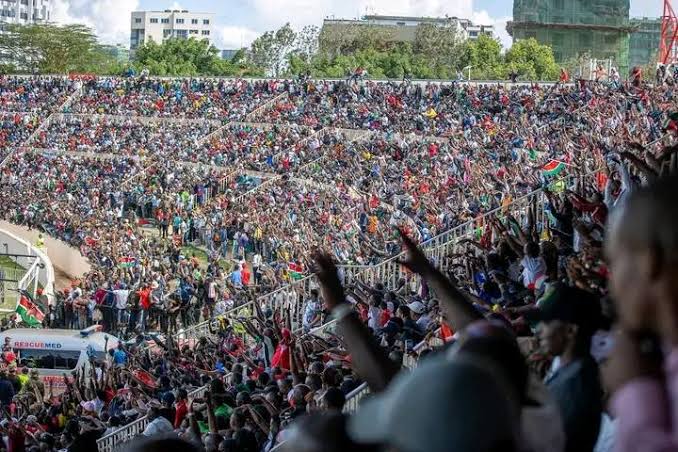
The staging of an international football fixture between Kenya and South Africa at Nyayo National Stadium on 17 November 2026 requires a comprehensive, coordinated and proactive safety and security operation. Beyond the excitement of the game, the successful delivery of an international match depends on effective planning, risk assessment, command and control, crowd management, emergency preparedness and cooperation among all stakeholders.
In accordance with the applicable Confederation of African Football (CAF) Safety and Security Regulations, match security should not be treated as an activity that begins on match day. It is a continuous operational process that starts during the initial planning stages, progresses through pre-match preparations, continues throughout the match and concludes with post-match evaluation and reporting.
The fundamental objective is to provide a safe and secure environment for players, match officials, spectators, VIPs, VVIPs, accredited personnel, media representatives and all other stakeholders.
1. Development and approval of the Match Security Plan
The first critical requirement is the preparation of a comprehensive Match Security Plan (MSP), developed by the appointed Match Safety and Security Officer in consultation with the Local Organising Committee (LOC), Football Kenya Federation (FKF), stadium management, National Police Service and other relevant emergency-response agencies.
The plan should provide a clear operational framework covering:
- Match-specific security risk assessment and mitigation measures.
- Deployment of police officers, stewards and private security personnel.
- Stadium access control and accreditation procedures.
- Spectator segregation and crowd management.
- Team, match officials and VIP/VVIP security arrangements.
- Emergency response, evacuation and contingency procedures.
- Medical and fire safety arrangements.
- Communication, incident reporting and command structures.
- Post-match crowd dispersal and traffic management.
The security plan must be informed by a physical stadium inspection and an assessment of the anticipated attendance, the nature of the match, supporter profiles, prevailing security conditions and identified vulnerabilities.
It should be circulated to the relevant stakeholders for review, coordination and approval before match day. Every agency must understand its responsibilities, reporting lines and operational expectations.
2. Pre-match security coordination meetings
Effective coordination is the foundation of successful match security operations.
A multi-agency security meeting should be convened ahead of the fixture, bringing together representatives from:
- Football Kenya Federation and the Local Organising Committee.
- National Police Service and relevant specialised police units.
- Stadium management and stadium safety personnel.
- Private security companies.
- Stewarding management.
- National Government Administration Officers.
- National Disaster Management and emergency response representatives.
- Fire and rescue services.
- Medical and ambulance service providers.
- Traffic management agencies.
- Team liaison and transport representatives.
The meeting should review the Match Security Plan, confirm deployment arrangements, assess outstanding risks, agree on operational timelines and establish communication protocols.
Particular attention should be given to the arrival and departure of both national teams, airport-to-hotel and hotel-to-stadium movements, training sessions, supporter management and the security of the stadium perimeter.
All agreed resolutions should be documented, with responsible officers assigned to specific actions.
3. Stadium inspection and assessment of safe capacity
One of the most important responsibilities before admitting spectators is establishing the stadium's maximum safe holding capacity.
The approved capacity must not simply be based on the stadium's historical attendance or the number of available seats. It must be established through a professional assessment of the usable spectator accommodation, exit capacity, circulation areas, infrastructure and emergency evacuation arrangements.
The inspection should consider:
- Structural integrity of spectator stands.
- Condition of entry and exit gates.
- Stairways, gangways and vomitories.
- Emergency evacuation routes.
- Perimeter fencing and barriers.
- Fire extinguishers and firefighting equipment.
- Public address systems.
- CCTV surveillance systems.
- Lighting and backup power.
- Medical facilities and emergency access routes.
- Accessibility arrangements for persons with disabilities.
All gangways, staircases and emergency exits must remain unobstructed throughout the event.
Stadium management should ensure that safety signage is visible and that emergency evacuation routes are clearly identifiable. Any identified infrastructure deficiencies should be addressed before the stadium is cleared for use.
4. Stadium zoning, accreditation and access control
Access control must be implemented to ensure that individuals only enter areas for which they are authorised.
The CAF Safety and Security Handbook provides a structured stadium zoning approach, distinguishing restricted competition areas, public areas, operational areas, VIP facilities and media facilities.
For the Kenya versus South Africa fixture, the security team should establish clearly defined access points for:
- General spectators.
- VIP and VVIP guests.
- Home and visiting team officials.
- Match officials.
- Media and broadcasting personnel.
- Accredited LOC and competition personnel.
- Emergency and medical service providers.
Accreditation must be checked at designated access points, with additional access-control measures applied to restricted areas.
No individual should be permitted into the field of play, dressing-room corridors, officials' areas or other restricted zones without the appropriate authorisation.
A controlled access system, supported by trained security personnel and clear directional signage, will reduce unauthorised movement and improve overall stadium management.
5. Spectator screening and prohibited items
An effective search regime must be established before spectators enter the stadium.
All spectators should be subjected to proportionate screening in accordance with the approved stadium security procedures and applicable national laws.
Security personnel should be briefed on the prohibited-items list and trained to identify items that may compromise the safety and security of spectators, players and officials.
Screening should cover:
- Personal belongings and bags.
- Items capable of causing injury.
- Pyrotechnics and unauthorised fireworks.
- Weapons and dangerous objects.
- Flammable and explosive materials.
- Unauthorised banners, objects or materials that may create safety risks.
Screening personnel should conduct their duties professionally, respectfully and consistently.
The organisers should also establish procedures for handling prohibited items, refused entry, unattended property and any security incidents arising at the gates.
Adequate screening lanes and personnel should be provided to prevent excessive queues and congestion outside the stadium.
6. Crowd management and spectator segregation
Crowd management must be proactive rather than reactive.
The security operation should provide for the orderly arrival, entry, movement, seating and departure of spectators.
Where segregation is required, separate arrangements should be established for Kenyan and South African supporters, including designated entry gates, seating sections, circulation routes and parking arrangements where applicable.
Stewards should be deployed strategically at:
- Stadium perimeter and outer cordons.
- Spectator entry and screening points.
- Internal circulation areas.
- Stairways and gangways.
- Spectator seating sections.
- VIP and VVIP access points.
- Pitch perimeter and restricted areas.
- Emergency exits.
Supervisors must continuously monitor crowd density and identify early warning signs of congestion, overcrowding, disorder or distress.
The use of barriers should facilitate orderly movement without obstructing emergency exits or creating dangerous bottlenecks.
The end-of-match dispersal strategy must be agreed upon before kick-off, taking into account the movement of both sets of supporters, traffic flow and the safety of the surrounding community.
7. Command, control and the Venue Operations Centre (VOC)
The Venue Operations Centre should function as the central coordination and monitoring hub for all stadium safety and security operations.
It should bring together designated representatives from stadium management, police, security, stewarding and emergency services.
The VOC should have access to functional CCTV surveillance, reliable communication systems, public address controls, stadium monitoring facilities and relevant emergency-response information.
All significant incidents should be reported to the VOC immediately, assessed and addressed through the established command structure.
The Match Safety and Security Officer should maintain close coordination with the police commander and other agency representatives to ensure that decisions are made promptly and that resources are deployed appropriately.
A clear chain of command is essential to avoid conflicting instructions, duplication of responsibilities and delayed responses.
8. Emergency preparedness, medical and fire safety
An international match must have a clearly documented emergency preparedness and response framework.
The organisers should ensure the availability of qualified medical personnel, ambulances, first-aid stations and established referral arrangements with designated hospitals.
Fire safety arrangements should include inspected firefighting equipment, trained personnel, clear fire-service access routes and an agreed response procedure.
Emergency scenarios to be addressed in the contingency plan include:
- Fire outbreaks.
- Structural or infrastructure failures.
- Medical emergencies and mass casualties.
- Crowd surges and overcrowding.
- Pitch invasions and spectator disorder.
- Security threats.
- Severe weather conditions.
- Power or public address system failures.
- Emergency evacuation.
The emergency response plan must identify who has the authority to initiate specific interventions, how spectators will be informed and how the different emergency agencies will coordinate their response.
9. Team movements and protection of match officials
The security arrangements must extend beyond the stadium itself.
The two national teams, match officials and designated competition representatives should be provided with coordinated security arrangements covering their accommodation, training facilities and transportation.
Team movements should be coordinated with the relevant police command and transport personnel.
Designated liaison officers should maintain communication with team representatives and provide timely information on movement schedules and security requirements.
The visiting South African delegation should receive appropriate security support and assistance throughout its stay in Kenya.
10. Match-day operational briefing and deployment
Before the opening of the stadium gates, all deployed personnel should attend a comprehensive operational briefing.
The briefing should cover:
- The overall security concept and objectives.
- Individual assignments and deployment locations.
- Chain of command and reporting procedures.
- Radio communication protocols.
- Access control and screening procedures.
- Spectator segregation arrangements.
- Emergency exits and evacuation procedures.
- Incident management and escalation.
- Professional conduct and respect for spectators.
The Match Safety and Security Officer, police commander, stewarding manager and other operational leads should confirm readiness before the stadium opens to spectators.
Security personnel must remain alert throughout the match, including during half-time and immediately after the final whistle.
11. Post-match security and dispersal arrangements
The security operation does not end when the referee blows the final whistle.
The post-match phase requires careful management to ensure the safe departure of spectators, teams, officials and other stakeholders.
The organisers should implement a coordinated dispersal strategy, ensuring that supporters are directed towards their designated exits and that competing groups are managed appropriately.
Police and traffic officers should coordinate traffic flow around the stadium, while stewards maintain order within the spectator accommodation areas.
The departure of both teams and match officials should be coordinated to minimise unnecessary congestion and exposure to security risks.
A post-match debrief should be conducted to assess operational performance, record incidents, identify gaps and recommend improvements for future international fixtures.
12. Incident reporting, documentation and post-match evaluation
Proper documentation is an essential component of professional match security management.
The security team should maintain accurate records of deployment, incidents, interventions, emergency responses and any operational challenges experienced before, during and after the match.
A post-match security report should capture:
- Overall security operations and personnel deployment.
- Spectator attendance and crowd-management performance.
- Access control and screening effectiveness.
- Incidents recorded and actions taken.
- Medical and emergency interventions.
- Stadium infrastructure and safety observations.
- Areas requiring improvement.
- Recommendations for subsequent matches.
This process promotes accountability, institutional learning and continuous improvement in football safety and security management.
Conclusion: A shared responsibility
The Kenya versus South Africa international fixture is an opportunity to demonstrate Kenya's commitment to professional football safety and security management.
The successful implementation of the Match Security Plan will depend on cooperation, discipline, preparedness and the commitment of every stakeholder.
CAF Safety and Security Regulations establish minimum standards, but compliance should not be viewed merely as a requirement for organising an international match. It should represent a commitment to protecting human life, preserving the integrity of football and ensuring that spectators can enjoy the game in a safe environment.
Every police officer, steward, private security officer, stadium official, emergency responder and event organiser has a responsibility to contribute towards this objective.
A successful match is not measured only by the result on the scoreboard, but also by the safety of everyone who enters and leaves the stadium.
Our collective objective should be simple: a safe stadium, effective coordination, professional security operations and zero loss of life.
AUTHOR
Austin Oduor Otieno
CAF National Safety and Security Officer (NSSO), Kenya
Football Safety and Security | Stadium Operations | Crowd Management | Match Security Planning